A villa on Mars: The mysterious and magical world of Joshua Flint
We present on Stanza 251 an intense and stimulating conversation with American painter Joshua Flint. His arcane scenes are saturated with dreamlike colors, set in places altered by inexplicable phenomena: phosphorescent snow-capped mountains, gardens and forests imbued with a dark vitality, mysterious interiors with large windows overlooking alternative dimensions. His characters burn inside cold flames, stand petrified in the middle of stormy seas, bathe in impossible pools. Enjoy the read.
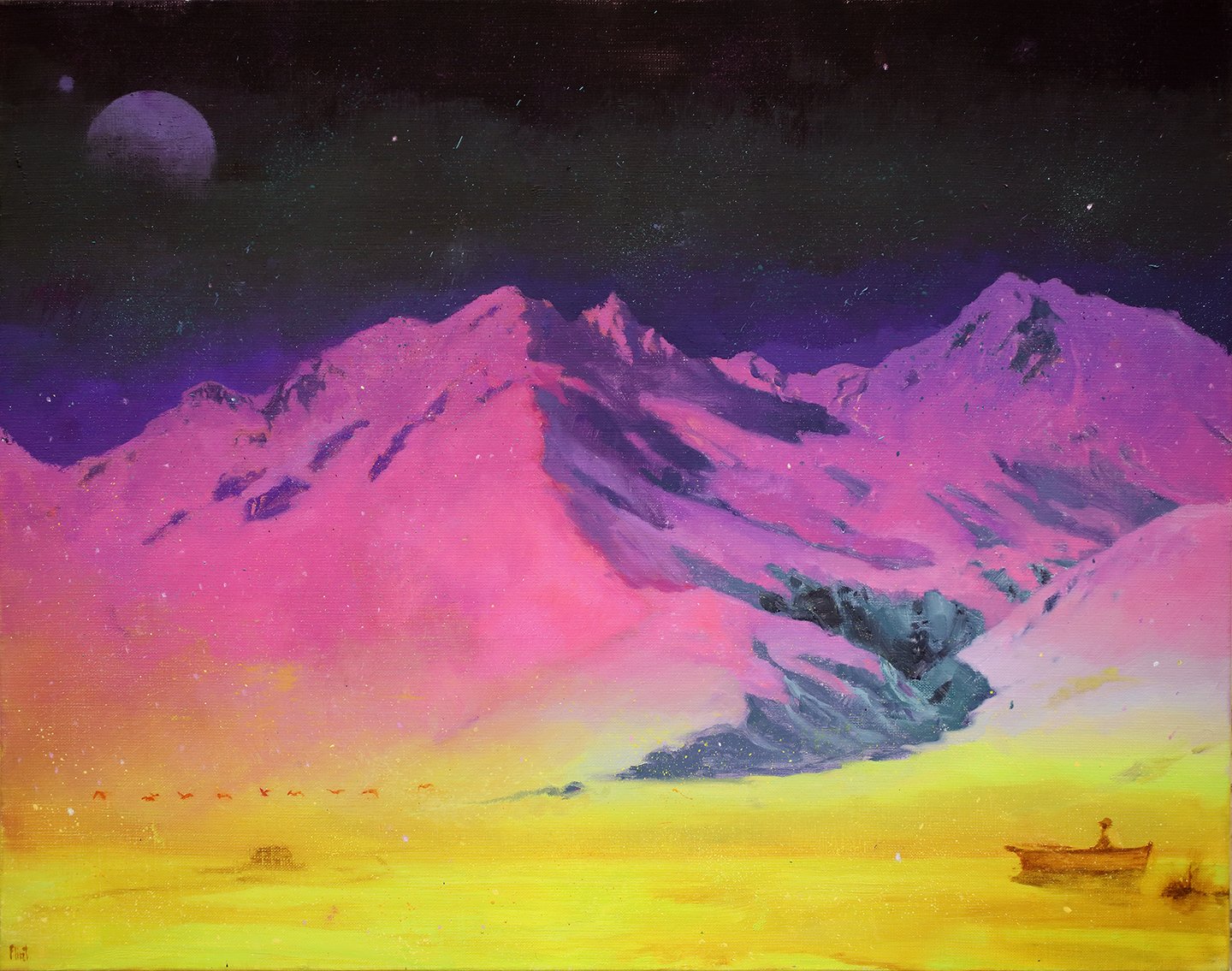
Along The Steel Breeze, 16x20 inches, oil on linen
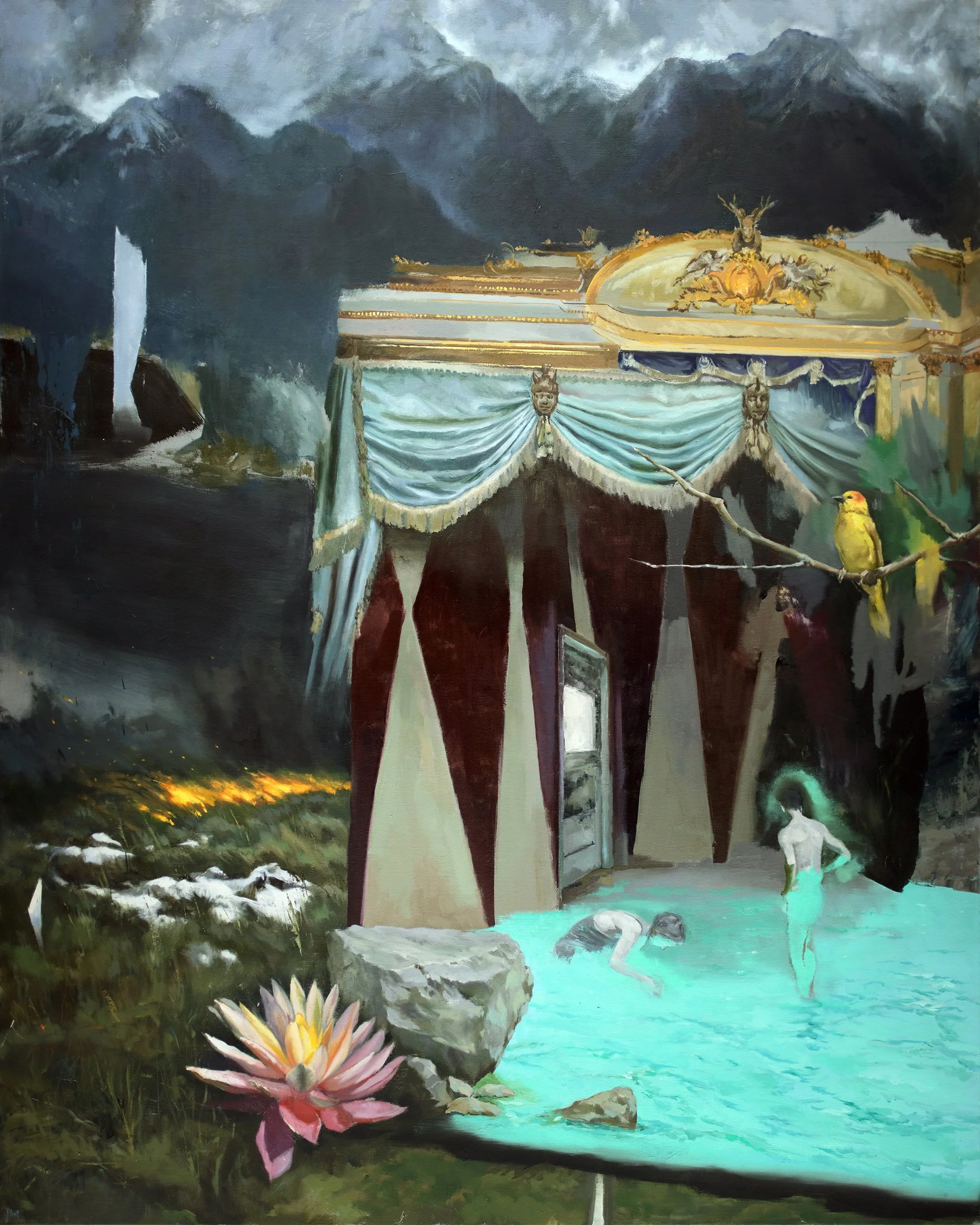
S251: In some of your paintings I see a relationship with the architectural tradition of Modernism, transported, however, to a somewhat sci-fi setting (I could say: a mansion on Mars!)...it seems to me a very unique combination, a montage of incongruous elements. I ask you to tell us if this method of working corresponds to a postmodern type of eclecticism or if your position is different.
J.F.: I’ve not considered this term relating to my paintings prior to your question. It’s a new lens to view my work through. That’s always a gift, so thank you. The first thought that comes to mind is that eclecticism is quite broad and speaks to the remix culture that has always been around in art like it has in music, fashion, design, film. New things are always building on or incorporating or re-envisioning inspiring ideas so in that sense my work could relate to the integrative approach of eclecticism.
I’m interested in the synthesis of elements like figures, landscapes, and architecture, - I want to see how they all sit together, in a familiar yet unexpected way. Sometimes they coalesce into a mysterious yet relatable type of environment and other times a fracturing is evident. Why I put these juxtapositions together in the first place is not clear.
My paintings respond more naturally to our formulation of self, the atemporal landscape we find ourselves in, and the myth making that constructs our personhood. To me this often incongruent, nonlinear, and palimpsest like human quality speaks to the multifaceted nature of existence or an individual. We are a happening put in motion by all these disparate elements, much like my paintings suggest.
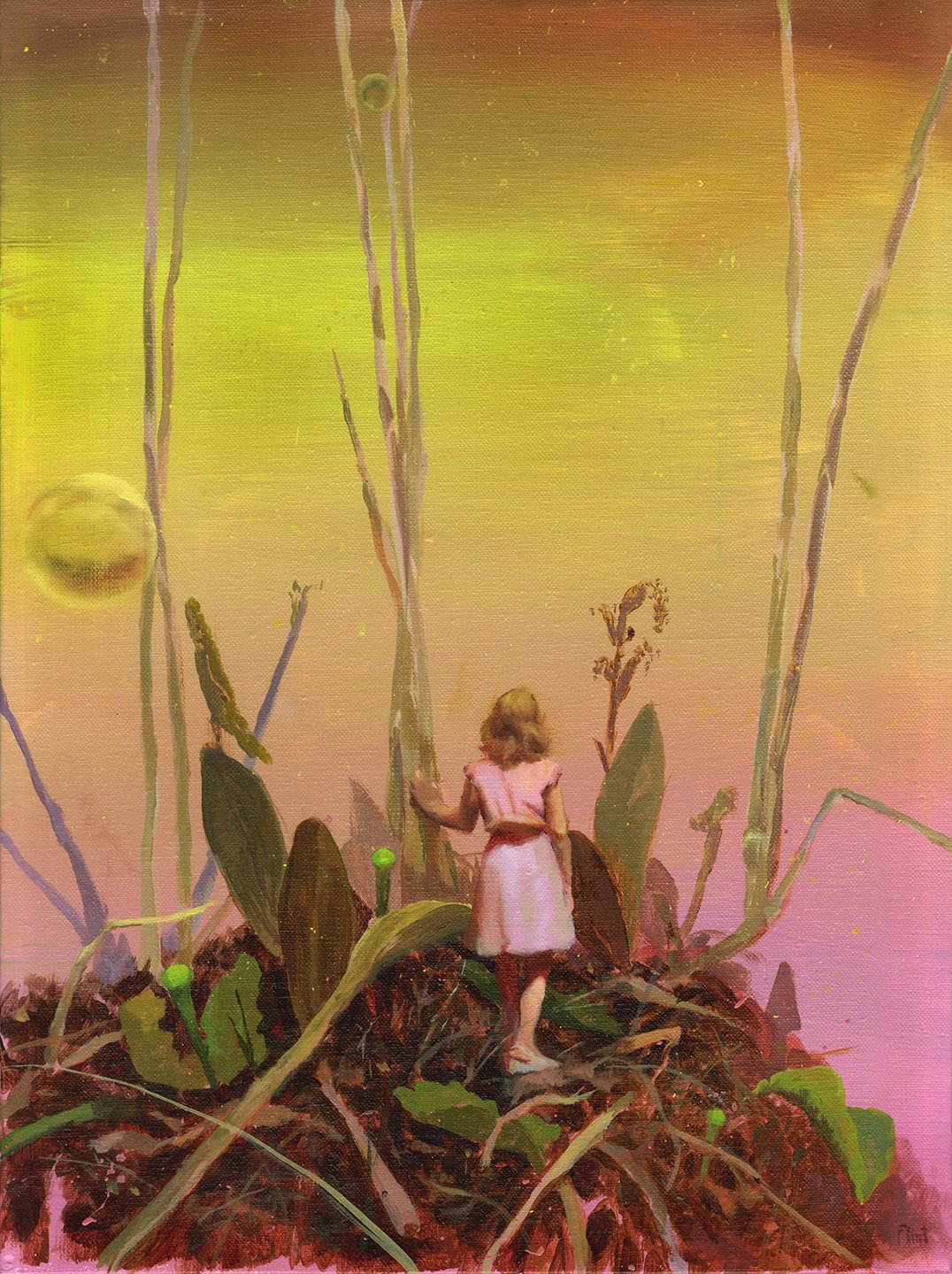
Root System, 16x12 inches, oil on linen
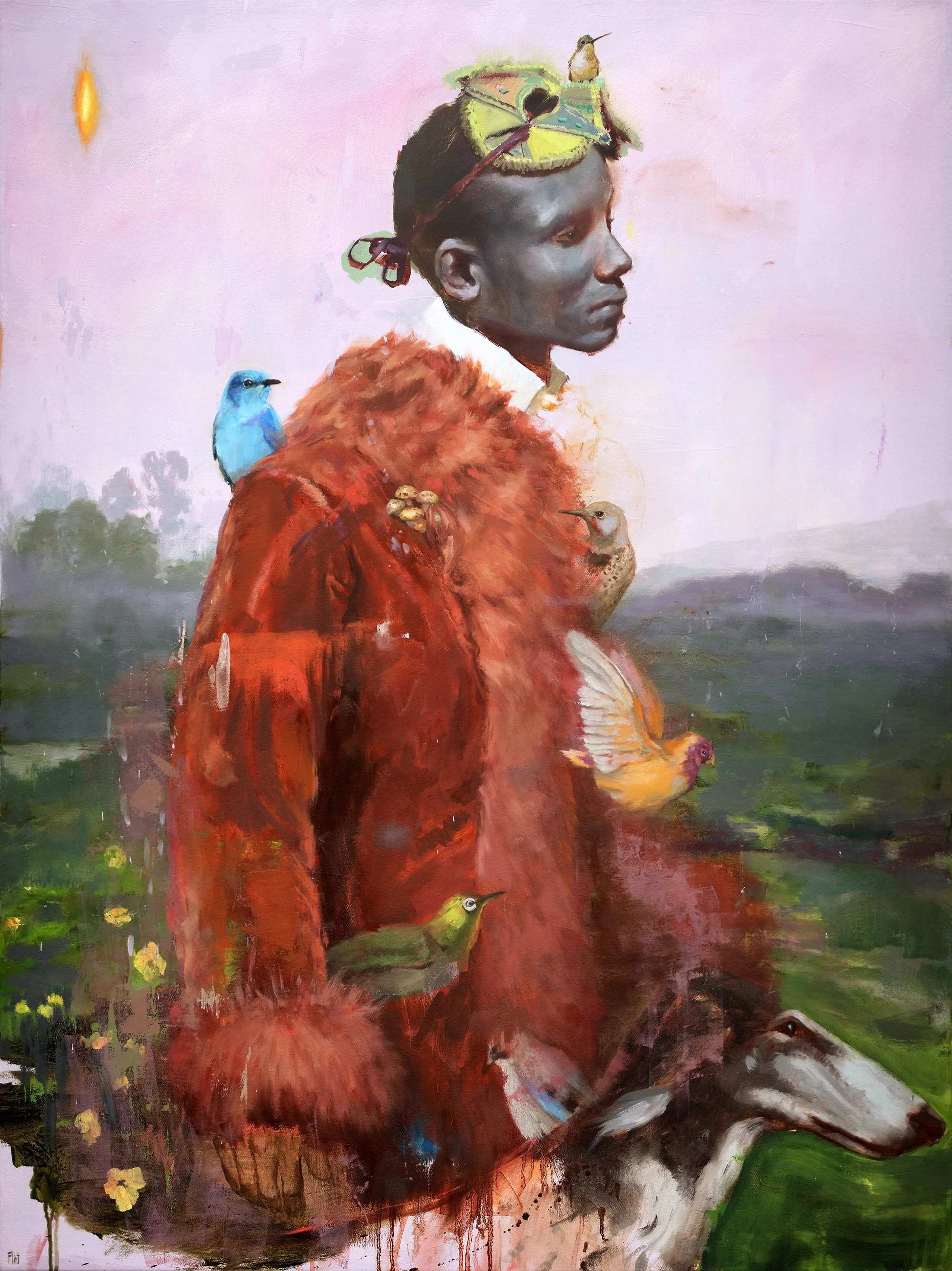
Sanctuary, 48x36 inches, oil on canvas
S251: Based on what criteria do you select the different settings (the garden, the modern villa, the mountainous landscape) that you stage in your paintings? From where do you derive these suggestions? The human figures you paint are very often engaged in enigmatic activities, wrapped in a dramatic atmosphere. I'd like to know how you come to construct these situations, and to what extent your relationship with art history helps to define these scenes.
J.F.: I’m a believer in subject matter picking me versus me being overly deliberate about what to select. Often, I will gravitate to an image or respond to a reading. A sort of wordless pull occurs. There’s an engagement with the unconscious and dream logic and I will explore this with sketches, drawings or with digital software. This helps me establish a starting point to a painting or it gets abandoned at this stage. Maybe it’ll come back around or maybe not. I have many of these quick, little drawings around the studio.
I’m usually starting a painting without it fully formed even if I’ve made mockups or sketches. That way I find a resolution through the act of painting, and it forces me to be open to the unfolding scene. Many paintings have come together in ways I couldn’t have preplanned.
Although both personal experience and sifting through archives of images is useful, most ideas come from literature, poetry, natural science and art history, as you said. On my nightstand I have pens and pencils along with a little pad of paper to sketch anything that might come to mind, often when I’m reading. I’m not illustrating a passage from a book or anything – it’s about creating connections to whatever I was working on at the studio that day or week. It’s more of a free association to various things I’ve been considering. The brain has a way of making unexpected connections as it shifts towards sleep. Many paintings have begun while lying in bed.
There are recurring elements, like tables or chairs or boats, that act like figures. I see them as sort of stand-ins. I’m drawn towards mountains and gardens, as you mentioned. These elements act more as metaphor, symbol, or allegory, towards myth making. The mountains have been prominent lately. These geological features have shaped our concept of the self and taught us much about the natural world and human endeavor across time and culture. The German Romantic painter Caspar David Friedrich linked mountains, and all of nature, to contemplation, freedom, and creativity; ultimately pointing towards the grand possibility of human aspirations. Poets like Byron, Shelley, and Keats, and philosophers, such as Nietzsche and Ruskin, reinforced this growing sense of insight provided by nature and specifically to mountains. This interplay between the physical space we travel through and the universe within is symbolized in the mountain and has been explored in various ways throughout art history. Mountains of the Mind, by Robert Macfarlane is a lovely read on the subject.
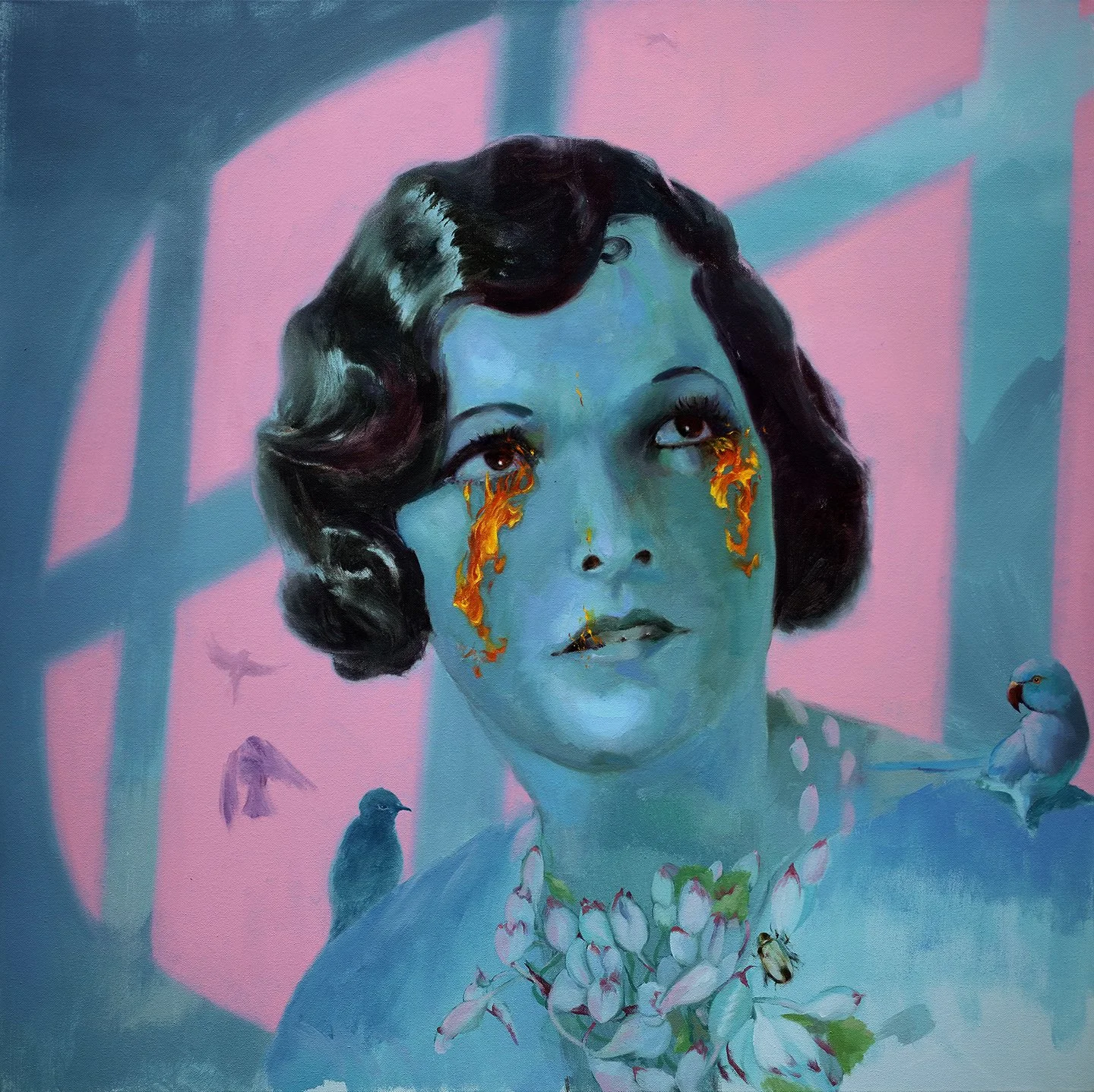
Rare Sighting, 36x36 inches, oil on canvas
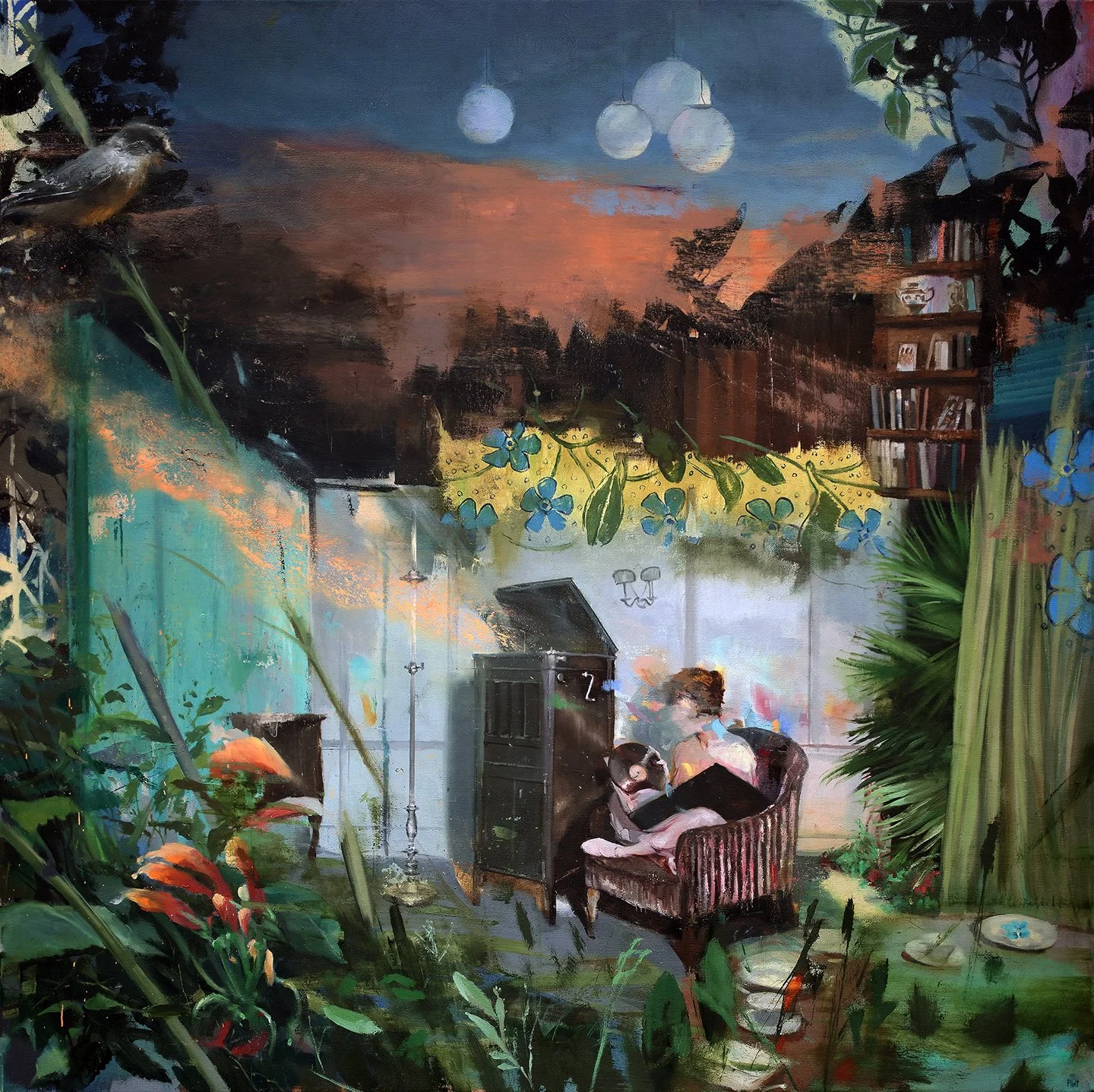
Sound System, 40x40 inches, oil on canvas
S251: Your paintings are always immersed in an atmosphere of rarefied enchantment, as if the situations narrated are imbued with a mysterious spell. It is an atmosphere of archaic magic, hardly? linked to a contemporary technological dimension. Your work seems to recover elements and suggestions from a fabulous past. Where does all this magical intensity come from?
J.F.: The world is certainly mysterious and magical. And it’s intense and strange– stranger than our imaginations. As I've gotten older myths seem more relevant and insightful than ever. I enjoy how myths punctuate mundanity with an extraordinary moment or incident that spins the story into an uncanny place. This moving away from reality to better understand reality is how I think about painting. I’m reminded of anthropologist Claude Levi-Strauss who talks about how myths have a sociocultural function: “The mythic narrative is to make the world intelligible by resolving the contradictions of life.” Myths are slippery and reveal themselves partially, a little at a time. I enjoy that.
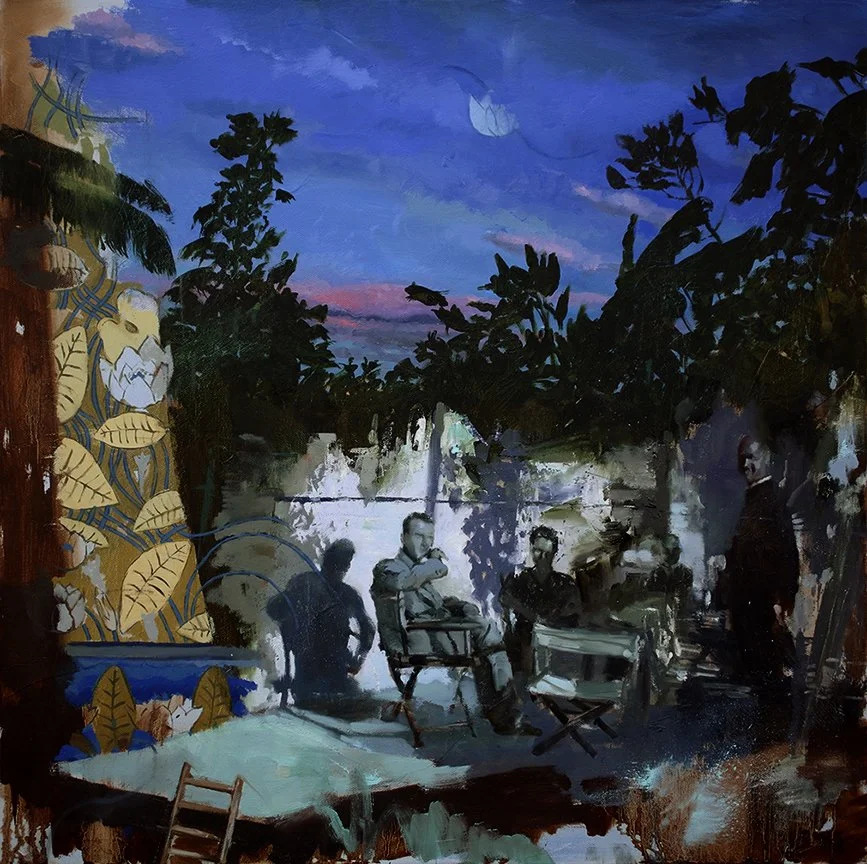
The Nature Forum, 24x24 inches, oil on canvas
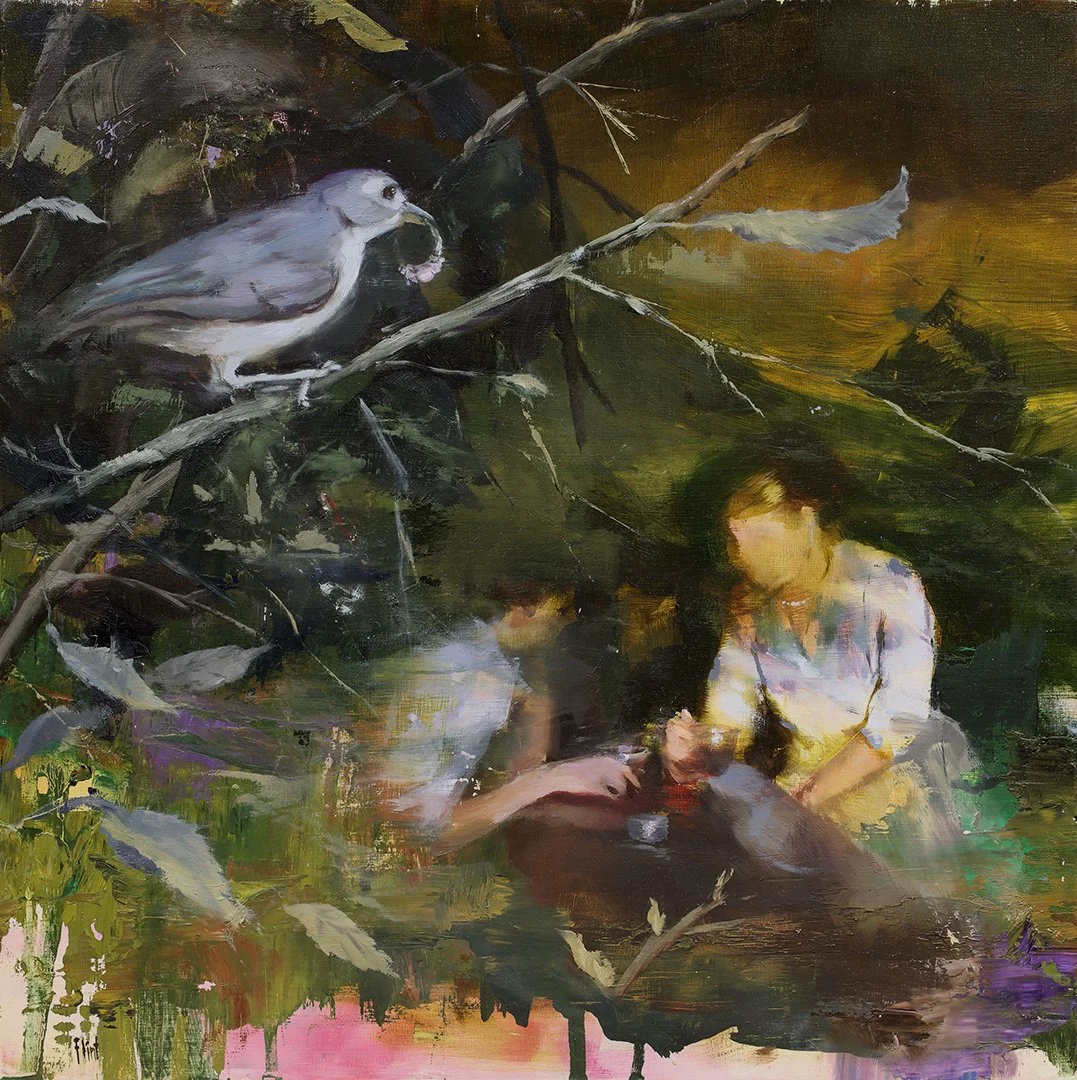
The Pearl, 16x16 inches, oil on wood
S251: You make very particular and spectacular use of color, as if special effects of extraordinary vividness and emotion were in action. Are today's cinematic images - high-definition, hypnotic, super detailed - among your sources of inspiration?
J.F.: Film has always been an influence. Early in my life, as a recent art school graduate, I thought about working in production design for movies. I’m drawn towards moods of near monochromatic color. Or an establishing shot that invites the viewer into a world. Or how the atmosphere elucidates space. These are often what I intuitively respond to in film.
In The Night Garden series you may be referring to, I used vibrant color as a metaphor for transition and change. This adds a necessary tension to the work that heightens the scene beyond their dreamlike or contradictory quality. You previously mentioned a painting that seems like “a mansion on Mars”. Those unexpected correlations within the scenes are important, but it is the color that heightens the sense of the uncanny. I was looking at the Northern Lights as a reference for color throughout that series. Instead of the lights being a phenomenon of the sky, I transposed that electric color onto the landscape.
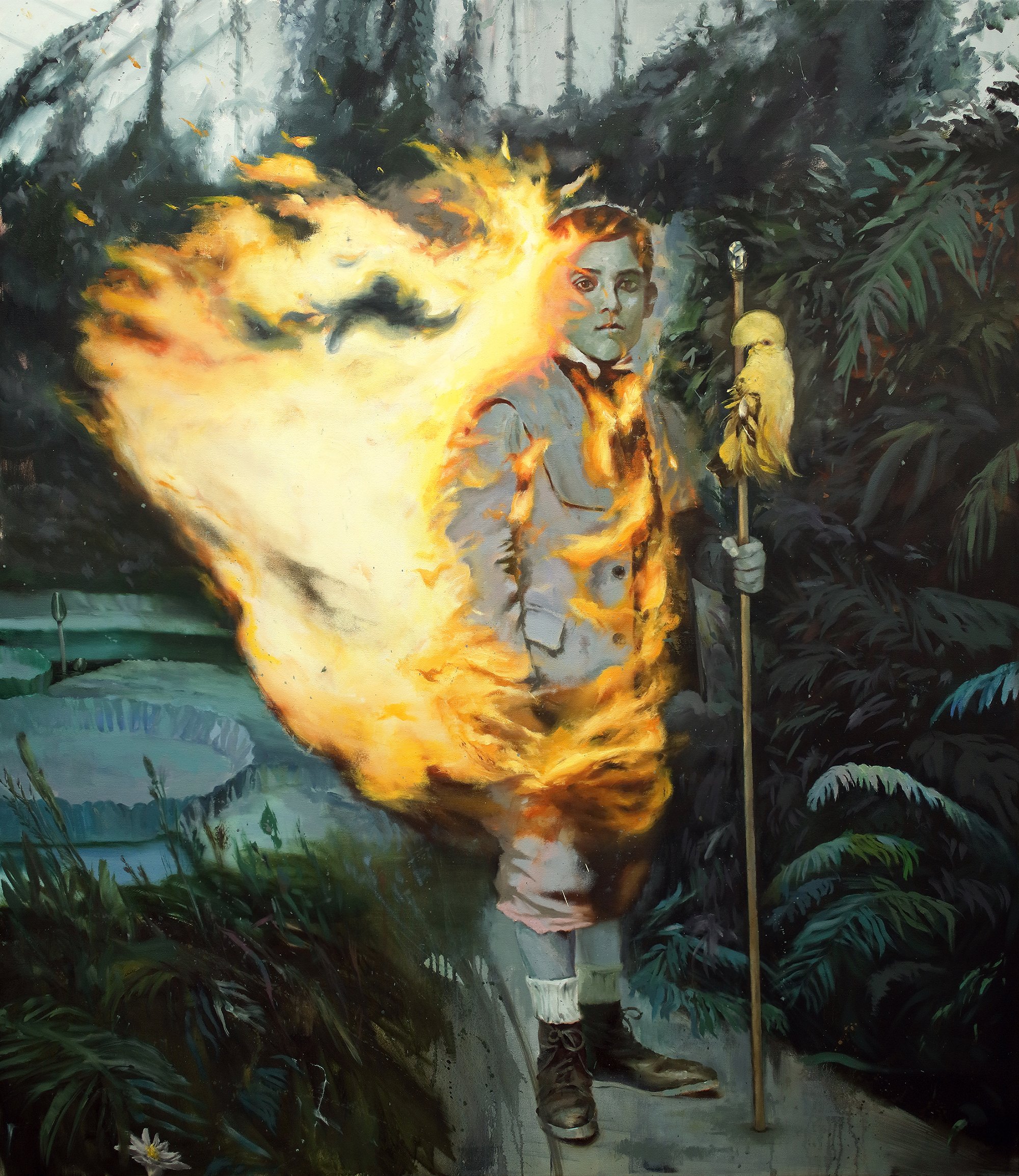
Flushed & Flamelike Themselves, 68x58 inches, oil on canvas
S251: Your painting enacts a re-interpretation of the modern figurative painting tradition, using different techniques. You turn realism into dreams, you master the expressionist dimension with extreme skill, you make use of themes taken from art history but do not use the technique of quotation in a cold and superficial way. As a result, your approach seems very original to me. You construct a visionary poetic dimension, you produce fantastic situations in which you place characters often engaged in mysterious activities.
Is it fair to say that your visual world reworks nineteenth-century painting by mixing it with a kind of contemporary surrealism to arrive at an adventurous, sometimes dark and always mind-boggling storybook?
J.F.: Yes, absolutely that’s fair to say and quite high praise. Thank you for such kind words. Nineteenth century painting certainly has an influential role as I love Degas and Manet, in particular. There are many earlier painters who impact my thinking, like the directness of Velazquez or the fragmented atmosphere of an El Greco. The way he interpreted space was a revelation when I found his work as a student. Surrealists such as Leonora Carrington and Hieronymus Bosch with their powerful imaginative qualities serve as reminders to trust my strangeness and intuition.
Some of the darkness and mystery you mention arrives through the Romantic tradition and its emphasis on nature, spiritualism, and connection to the Gothic. As a child growing up across the western United States I experienced vast wilderness, open deserts, and epic mountain ranges. To my young eyes these topographies were invitations and warnings where beauty and danger were interwoven. That dual precipice is where I ground my paintings. I’m still chasing those hidden narratives.
Before we end, I had one last thought from your home country. I read it many years ago. Forgive me I don’t know where I came across this. Maybe you can enlighten me. It said in Italy you’re not considered a mature artist working at full capacity till you're sixty years old. That has been a source of comfort whether true or not.
Thank you very much for this terrific interview.
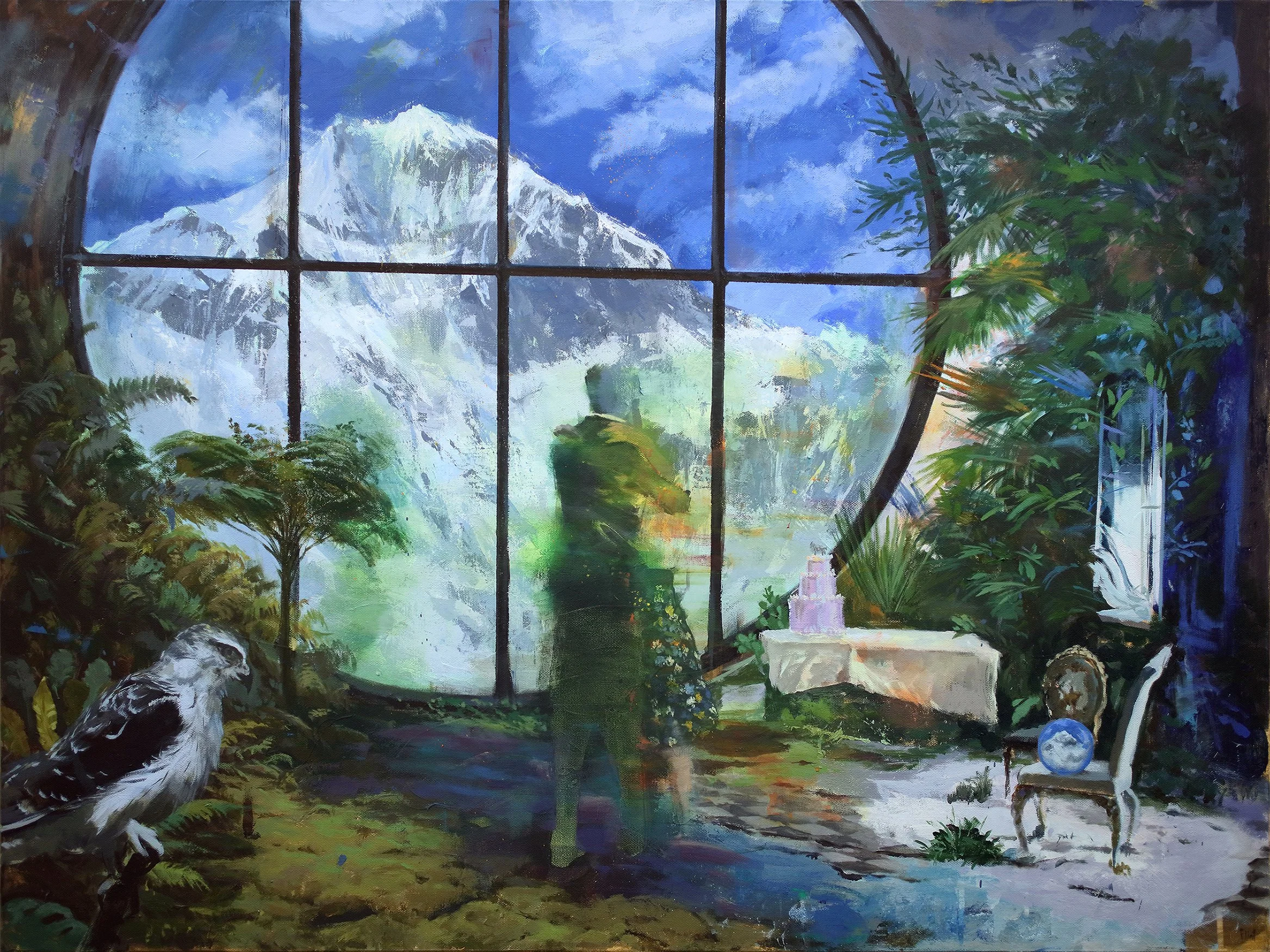
Transit of Venus, 30x40 inches, oil on linen
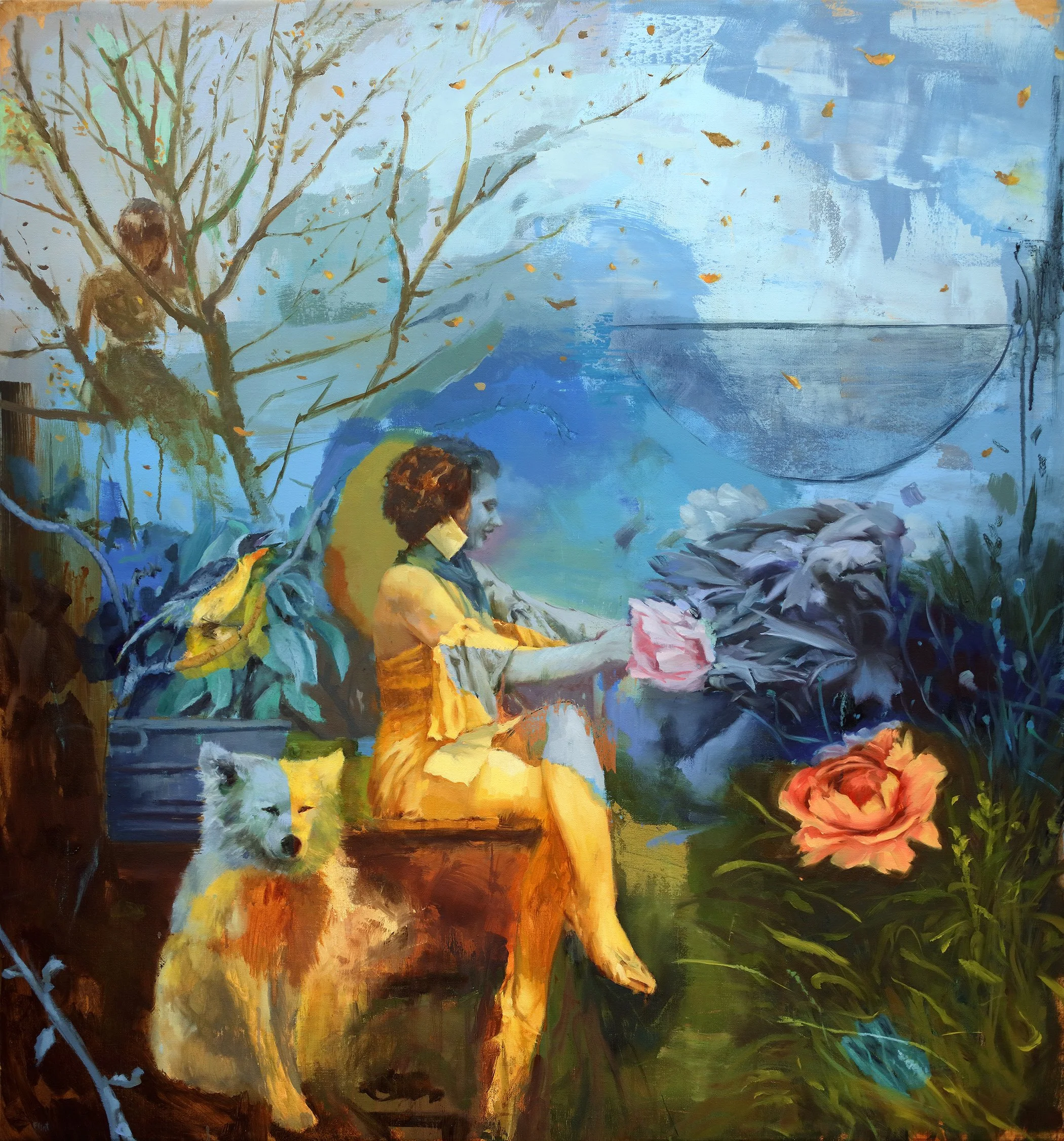
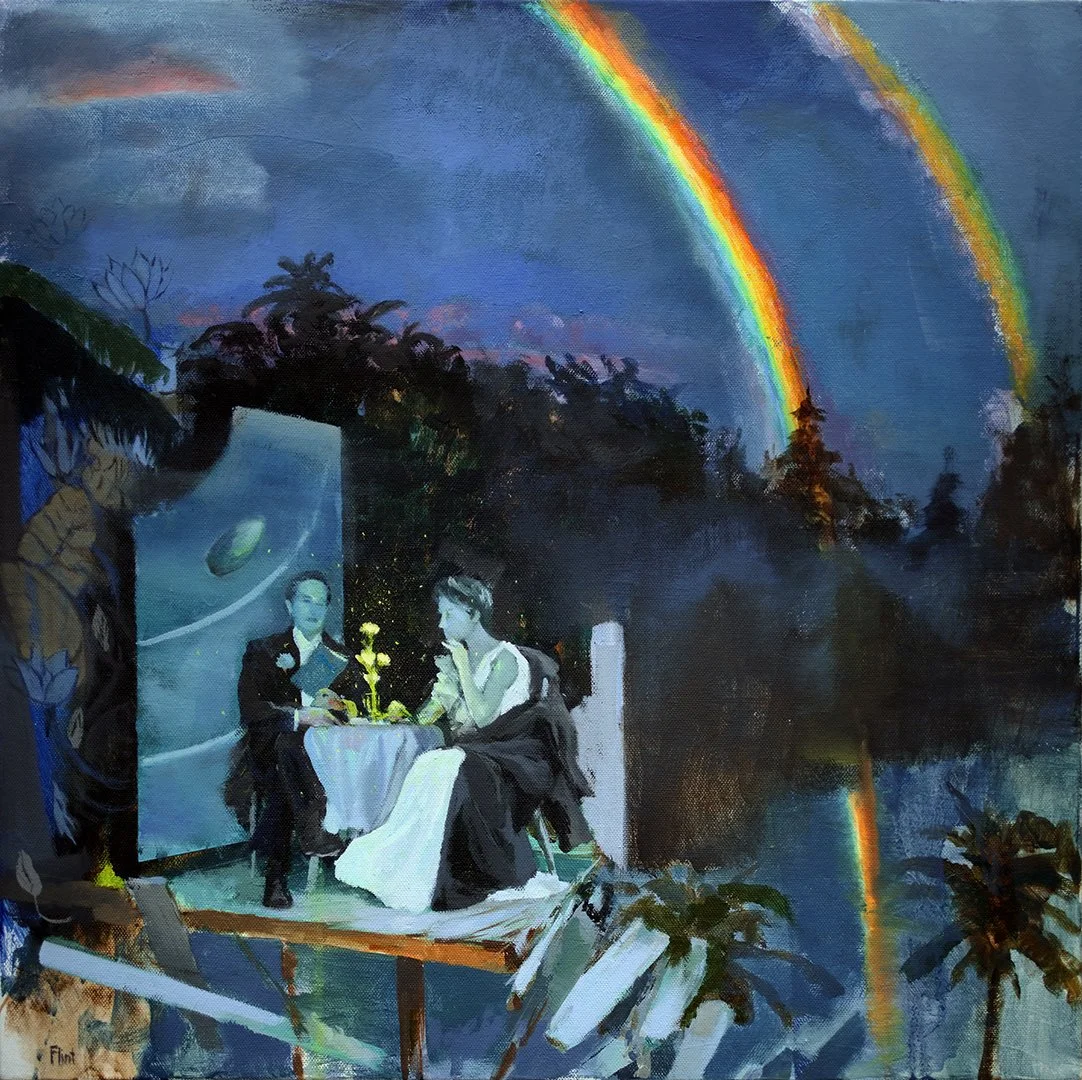
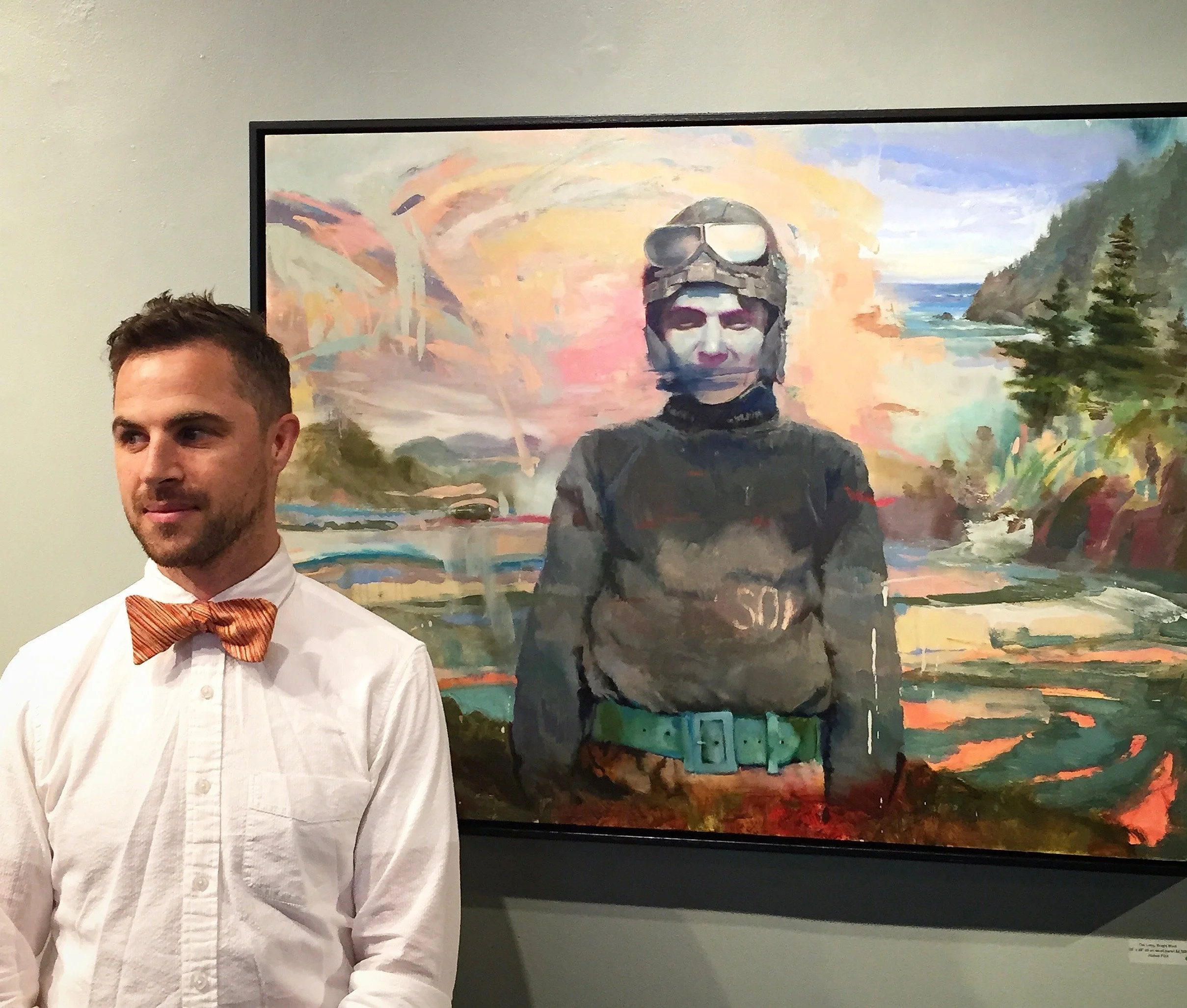
Joshua Flint is a visual artist utilizing oil paint to create archetypes and environments found in the Anthropocene. In his paintings imaginary figures protect gardens, become avian habitats, as well as pollinate flowers. Architectural spaces synthesize interior and exterior elements symbolic of the intricacies of the occupants. His paintings explore the historical role and trajectory of the natural sciences, of connection and disconnection, of spirit and matter, of fracture and formation. Driven by academic pursuits into forestry and wildlife ecology before turning his attention to art, Flint found that the sciences didn’t fully engage with questions he had about selfhood, memory, and history. His work draws inspiration from literature, poetry, philosophy, science, and nature writing. Themes arise through research into eco-psychology and cultural mythology, as well as through reflection of personal experience. Joshua has shown his work at regional art museums. His work has been placed in Coléccion Solo in Madrid, Spain, the Hinson Art Museum at Wingate University, the city collection of Astoria, OR, and in private collections in the US, Europe, and Asia. He is an associate professor at Pacific Northwest College of Art.